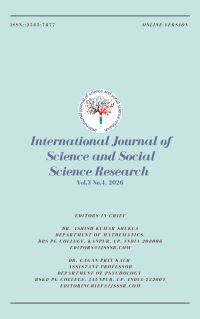
Tribal Infrastructure as A Constitutional and Human Rights Imperative: A Comparative Analysis of Indian Jurisprudence and International Law
DOI:
https://doi.org/10.63671/ijsssr.v3i4.517Keywords:
Scheduled Tribes, Tribal Infrastructure, Article 21, Indigenous Rights, UNDRIP, Comparative Constitutional Law, Road ConnectivityAbstract
Infrastructure development in tribal and indigenous regions is no longer a matter of administrative discretion but a legally enforceable human rights obligation. In India, Scheduled Tribes continue to face systemic exclusion from basic infrastructure such as roads, drinking water, sanitation, and connectivity, despite constitutional guarantees and targeted welfare schemes. This paper examines the constitutional foundations of tribal infrastructure rights in India, particularly under Article 21 of the Constitution, and analyses landmark Supreme Court judgments that have expanded socio-economic rights for Scheduled Tribes. The study further undertakes a comparative analysis with international legal frameworks, including the United Nations Declaration on the Rights of Indigenous Peoples (UNDRIP), International Labour Organization Convention No. 169, and jurisprudence of international human rights bodies. Using doctrinal and comparative methods, the paper argues that denial of infrastructure to tribal communities amounts to structural discrimination and violates both domestic constitutional norms and international human rights standards. The paper concludes with policy and legal recommendations for harmonising Indian governance practices with global indigenous rights standards.
Downloads
Published
Issue
Section
License
Copyright (c) 2026 International Journal of Science and Social Science Research

This work is licensed under a Creative Commons Attribution 4.0 International License.
How to Cite
Similar Articles
- Ramesh Naik, The Unique Jewelry of the Banjara Tribe: A review of Bargarh District, Odisha , International Journal of Science and Social Science Research: Vol. 2 No. 3: October-December 2024
- S. M. Tahmidur Rahman, Md Ashikur Rahman Talukder, PRA Application for Rural Road Development: A Case Study , International Journal of Science and Social Science Research: Vol. 2 No. 4: January-March 2025
- Rohit Kumar, Linkages between Food Security and the SDGs among Tribal Communities in Bihar , International Journal of Science and Social Science Research: Vol. 3 No. 2: July-September 2025
- Ranjita Marak, Deepa Mehta, Standard vs. Native: The Linguistic Dilemma of First-Generation Tribal Learners in West Bengal , International Journal of Science and Social Science Research: Vol. 3 No. 1: April-June 2025
- Rampada Sau, Geetanjali, Health Policy of West Bengal Government and Development of Health Infrastructure in West Bengal Since 2000 , International Journal of Science and Social Science Research: Vol. 2 No. 2: July-September 2024
- Jennifer Akhtara Hussain, Capital Punishment: An Issue of Life and Death , International Journal of Science and Social Science Research: Vol. 1 No. 2: July-September 2023
- Dr. Giriraj Singh Chauhan, Constitutional Democracy in India: The Past, The Present and The Future , International Journal of Science and Social Science Research: Vol. 4 No. 1: April-June 2026
- Mainak Putatunda, The Politics of Autonomy in High Technology Industries in the Contemporary Chinese State , International Journal of Science and Social Science Research: Vol. 3 No. 4: January-March 2026
- Hashim M Kabeer, Protecting Our Future: Understanding Children's Health Rights , International Journal of Science and Social Science Research: Vol. 2 No. 3: October-December 2024
- Advocate Pratibha Roka, Optimising AI and Digital Technologies for Advancing Public Awareness and Legal Literacy in Women’s Rights: A Gender Liberation Perspective in Nepal , International Journal of Science and Social Science Research: Vol. 2 No. 3: October-December 2024
You may also start an advanced similarity search for this article.
Most read articles by the same author(s)
- Abraham Lincoln, Ratna Sekhar Potineni, Dr. Ambedkar’s Contribution to Economic Reform , International Journal of Science and Social Science Research: Vol. 3 No. 4: January-March 2026