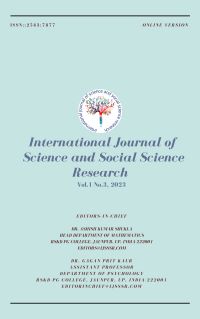
Machine Learning based MOOC Course Recommendation System
DOI:
https://doi.org/10.63671/ijsssr.v1i3.67Keywords:
MOOC, E-content, online educationAbstract
The use of Massive Open Online Courses (MOOCs) by students to advance their knowledge and abilities has grown in popularity in the modern world. Students may find it challenging to select the best course for their needs due to the variety of online learning platforms and courses. In this project, we suggest a mechanism for recommending Mooc courses that will assist students in finding the most appropriate course for a certain subject. According to user reviews, the algorithm will trawl through different online learning sites and choose courses. To help students choose the best courses, the recommendation system will take into account variables including subject, level of difficulty, course length, and course rating. Students can save time and effort in looking for the appropriate information by utilizing this approach. The suggested system may be a useful resource for helping students choose top-notch courses that fit their learning goals.
Downloads
Published
Issue
Section
License
Copyright (c) 2023 International Journal of Science and Social Science Research

This work is licensed under a Creative Commons Attribution 4.0 International License.

How to Cite
Similar Articles
- Arvind Kumar, Situ Kumari, Blended Learning and Educational Equity: A Thematic Analysis on Tribal and Gender-Inclusive Education , International Journal of Science and Social Science Research: Vol. 3 No. 1: April-June 2025
- Brandy Williams, Conceptualizing Dysstreamia: A Systematic Integrative Review of Algorithmic Exposure, Mood, and Minoritized Mental Health , International Journal of Science and Social Science Research: Vol. 3 No. 3: October-December 2025
- Manashi Haloi, Prof. Brinda Bazeley Kharbirymbai, Integrating the Indian Knowledge System (IKS) into Teacher Education: A Transformative Approach under NEP 2020 , International Journal of Science and Social Science Research: Vol. 3 No. 2: July-September 2025
- Abdul Rehman, Syed Ali Haider Shah, Muhammad Ehsan, Asad Ullah Nizamani, Muhammad Mehtab Afzal, Mateeb Talib Chaudhary, Hassan Ahmad Mughees, Muhammad Afnan Aziz Khan4, Food Retailers’ Adoption of Green Supply Chain Practices in the U.S.: A Case from the U.S. using the GSCM Model , International Journal of Science and Social Science Research: Vol. 2 No. 2: July-September 2024
- Ajeet Kumar Yadav, Kusum Lata Patel, Teachers’ Perception towards the Use of Information and Communication Technology (ICT) in Secondary School , International Journal of Science and Social Science Research: Vol. 2 No. 1: April-June 2024
- Rubi Tamang, Naraginti Amareswaran Reddy, Role of Educational Qualification and Ownership of Personal Computer on Pre-service Teacher's Digital Empowerment , International Journal of Science and Social Science Research: Vol. 2 No. 4: January-March 2025
- Sunita Shekhawat, Rekha Prajapat, Sustainable Future: Transforming Education via Virtual Lab , International Journal of Science and Social Science Research: Vol. 1 No. 4: January-March 2024
- Dr. Neaz Ahmed, Abul Kashem, Apu Gauala, Problems of Girls with Autism Spectrum Disorder and the Challenges Faced by Their Parents in Rearing , International Journal of Science and Social Science Research: Vol. 4 No. 1: April-June 2026
- Nguyen Minh Tuan, Le Cong Thanh Hoa, Vo Khanh Ha, Dinh Trung Kien, Analysis of the differences in the conflict in Kyiv in international media with some global online press channels , International Journal of Science and Social Science Research: Vol. 2 No. 3: October-December 2024
- zeena Premila Cutinha, S. Sriranjani Mokshagundam, A Study on Patronage Behaviour among Generation Z Consumers in Bengaluru towards Select E-Retailers , International Journal of Science and Social Science Research: Vol. 3 No. 1: April-June 2025
You may also start an advanced similarity search for this article.