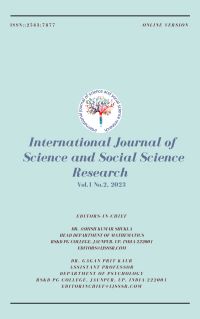
Indian Handicrafts: An Analysis of Potential Tourist Resources
DOI:
https://doi.org/10.63671/ijsssr.v1i2.18Keywords:
tourist, India, South IndiaAbstract
Man has had a natural desire to see new and far-off places since the beginning of time. It is certain that there were frequent journeys among these early human settlements because the inhabitants of the Indus Valley, Egypt, Mesopotamia, and other regions maintained commercial and cultural ties with them. Early on in history, Persia, China, and India were nations with which the Greeks and Romans had trade and cultural ties. India developed a cultural empire, known as Greater India, under the authority of the Mauryans, Satavahanas, Kushanas, Guptas, Pallavas and Cholas who also maintained trade and cultural ties with Greece, the Roman Empire, and South East Asian nations. Travel between West Asia and the Indian Sub-Continent was common even during the Middle Ages.
Downloads
Published
Issue
Section
License
Copyright (c) 2023 International Journal of Science and Social Science Research

This work is licensed under a Creative Commons Attribution 4.0 International License.